Who it is for
Systematic traders, software developers, and quantitative finance practitioners wanting automated execution.
Optional analytics counts pages and actions such as program views and webinar registration. Login, webinar registration, and payments work either way. Privacy
Advanced
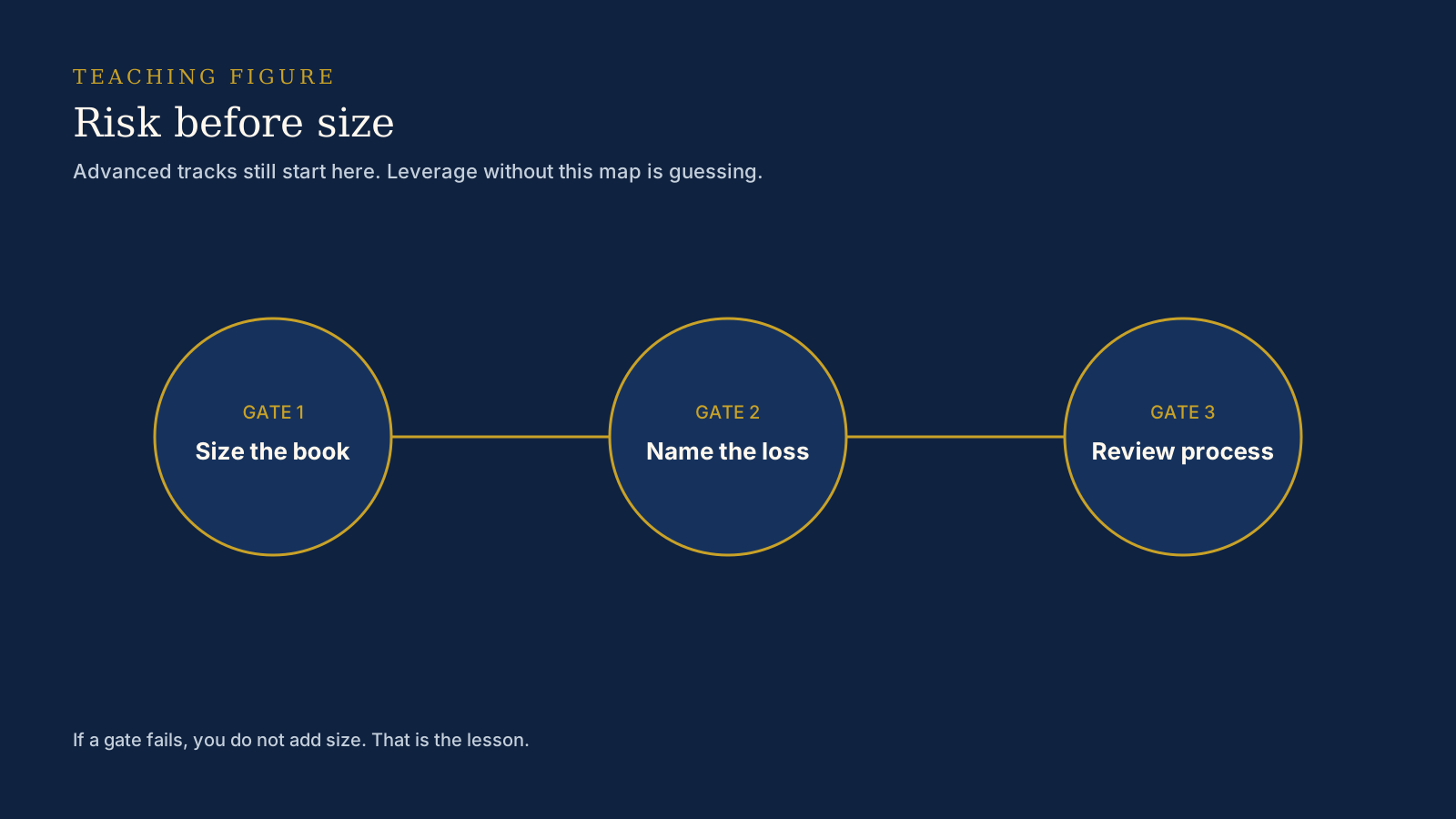
Rule-based algorithmic trading: Python data pipelines, strategy backtesting, execution slippage, broker API connectivity, and automated risk guardrails.
Systematic traders, software developers, and quantitative finance practitioners wanting automated execution.
Python, machine learning and algorithmic trading sit in every program as methods. Depth follows the subject. They are not a return.
Python
Work that needs a calculation is done in Python. Load a table, state the assumption, and compute the result with NumPy and pandas. A notebook is a worksheet. It is not a signal.
Machine learning
A model is a function fit to past data. The class covers features, a split between the data you fit and the data you score, and why a fit on history is not something you can spend. It is a method, not a tip.
Algorithmic trading
A strategy is a rule a computer can follow: data, entry, size, exit, and a hard risk stop. A test includes costs. The execution lab is the Algo Trading program. Every other program uses the same standard: write the rule before any code.